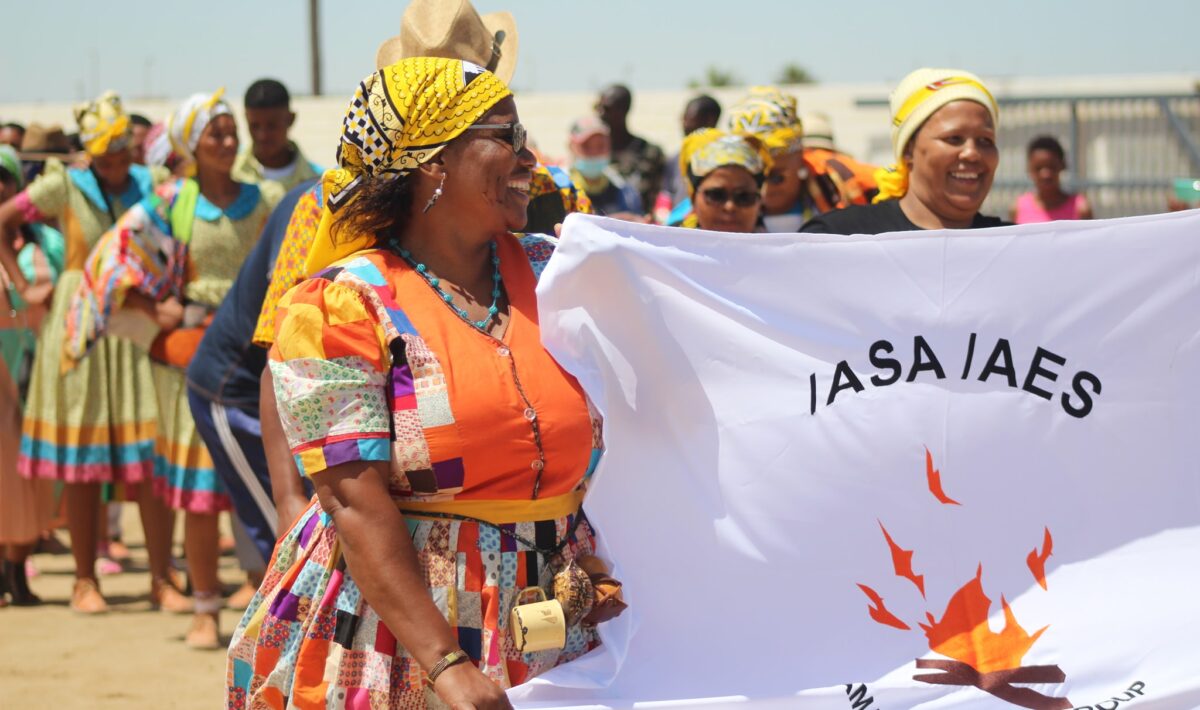

Welcome back to our series! Today we will be learning a thing or two about the Nama traditional group.
The Nama(also called Namaqua in older sources) are another Khoisan ethnic group that resides in Namibia. They are the largest of the Khoisan groups in Namibia, and they make up about 5% of the country’s population. The Nama are divided into several subgroups, including the Topnaar, the Naro, the Bondelswarts, and the Fransman Nama. Each subgroup has its own unique culture and traditions.
History
Here are some of the key events in the history of the Nama people:

- 1652: The Dutch East India Company establishes a settlement at the Cape of Good Hope. The Nama come into contact with the Dutch settlers.
- 1700s: The Nama are forced to move north due to conflict with the Dutch settlers.
- 1840s: David Witbooi leads a group of Nama people north of the Orange River and establishes a settlement in what is now Namibia.
- 1884: Germany declares a protectorate over Namibia. The Nama resist German rule.
- 1904-1908: Hendrik Witbooi Kaptein of the Nama revolted against German rule in Namibia on 3 October 1904. Witbooi rallied his people to fight for their freedom. The German colonial government carries out a genocide against the Nama people.
- 1915: The British defeat the Germans in Namibia. The Nama people are granted self-government.
- 1990: Namibia gains independence from South Africa. The Nama people are recognized as one of the country’s eleven official ethnic groups.
Lifestyle

Traditional attire
One of the most distinctive aspects of Nama culture is their colorful traditional dress. Women typically wear long, formal dresses that resemble traditional Victorian fashion. The women wear these dresses with a matching headwrap covering their hair. These dresses were introduced by Christian missionaries in the 1800s, and they have since become an integral part of Nama culture. The men wear shirts made of the same material as the women. Additionally both the men and the women wear shoes called veldskoene.

Music and Dance
The Nama people are naturally gifted in music, poetry, and prose. They have a rich oral tradition that includes proverbs, riddles, tales, and poems. Their praise poems range from impromptu love songs to songs that praise heroic figures and the animals and plants in their environment. The Nama people are also excellent dancers, and the Nama Stap is one of the most well-known dances in Namibia.

Traditional Weddings
Let’s take a look into this tribes very unique wedding celebrations. The Nama people have a complex and elaborate wedding ritual that can take up to a few months to complete. The process begins with the groom’s family discussing his intentions with their own family. If they agree, they then ask the bride’s family for permission to marry their daughter. If the bride’s family is also in agreement, the groom’s family visits the bride’s home, where they are greeted by the bride’s family. The groom’s family asks to open the gates, and the bride’s family asks the groom questions about the bride to make sure they know each other well. A few days later, the bride’s family visits the groom’s clan. If both families are satisfied, an engagement date is announced.

Additionally they host an engagement ceremony . At the engagement ceremony, the groom’s family brings live animals back to the woman’s parents’ home. The animal is slaughtered and hung on three poles, and each part is offered to the bride’s family. This process is also celebrated in reverse in the man’s family home. Both families have a white flag that cannot be removed, but it may wither or be blown away by the wind. On the day of the wedding, both families prepare animals and other food to bring to the bride’s home. The wedding itself takes place in a church. The festival that follows lasts for several days.
Here are some additional facts about the Nama people:
- They traditionally speak the Nama language, which is part of the Khoe-Kwadi language family.
- The Nama are primarily pastoralists, and their traditional diet consists of meat, milk, and vegetables.
- The Nama people were forced to flee their homeland in the Cape Colony due to conflict with Dutch settlers.
- The settled in German South West Africa (now Namibia) in the mid-19th century.
- By the end of the genocide on 31 March 1907, approximately 10,000 Nama had been murdered by the German ruling forces.
- Kaptein Hendrik Witbooi was the first African leader who took up arms against the German imperialists and foreign occupiers in defence of our land and territorial integrity.
If you enjoyed learning about the Nama tradition, also read the first article about the San on the site. Join us next time as we take a look at another Namibian tribe.