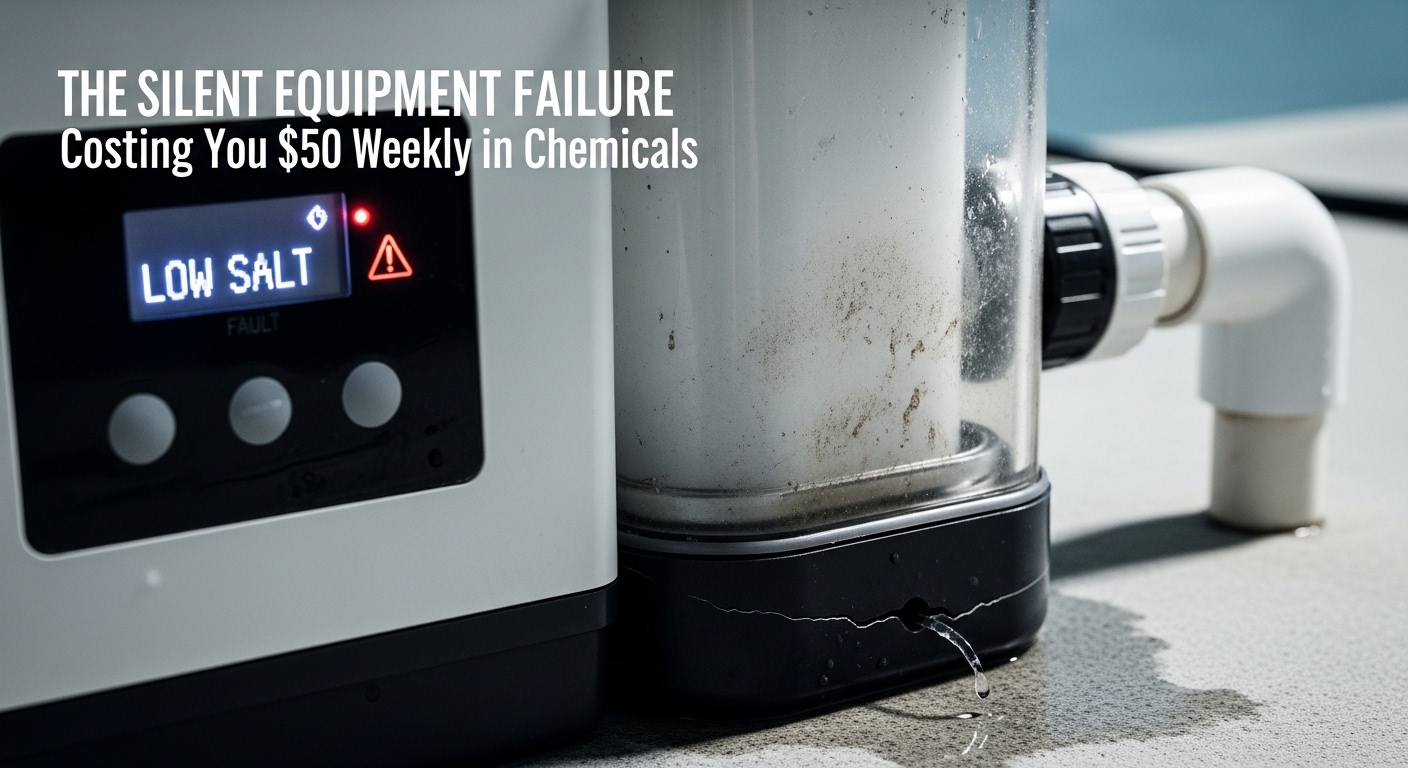

Your pool eats chlorine. Shocking weekly. Algae keeps returning. You’re spending a fortune on chemicals yet water quality stays marginal.
Meanwhile your pool chlorinator sits there looking fine, displaying normal readings, apparently working perfectly.
Except it’s not. It’s failing slowly, and you’re compensating with your wallet without realising it.
The Gradual Decline Nobody Notices
Chlorinators don’t die suddenly. They decline gradually over months. Output drops 10%, then 15%, then 25%. You don’t notice because the change is invisible day-to-day.
What you do notice: buying shock chlorine more often. Adding algaecide monthly instead of seasonally. Brushing walls twice weekly instead of fortnightly. Your pool demands more attention and chemicals despite nothing obviously changing.
A Rockingham owner spent six months battling algae blooms. Shocked his pool religiously. Tested water obsessively. Blamed Perth’s heat. His chlorinator showed normal operation on the display panel.
We tested actual chlorine output – running at 40% of rated capacity. The cell was heavily scaled but the control unit didn’t detect the problem. He’d spent hundreds on unnecessary chemicals compensating for declining chlorinator performance he didn’t know about.
The False Reading Trap
Most chlorinators display percentage output on their control panels. “Running at 80%” sounds reassuring. Problem is, that’s 80% of current maximum capacity, not original capacity.
A scaled cell running at 80% of its degraded maximum might only produce 50% of what it did when new. The display shows normal operation while actual chlorine production has halved.
This tricks pool owners into thinking everything’s fine while they’re slowly increasing chemical usage to compensate. By the time they realise the chlorinator’s the problem, they’ve wasted months of extra chemical costs.
The Chemistry Spiral
Declining chlorinator output creates a vicious cycle that accelerates chemical spending.
Low chlorine allows algae growth. You shock the pool. That temporarily spikes chlorine but messes with pH balance. Unbalanced pH reduces remaining chlorine effectiveness. You add more chlorine. The cycle repeats weekly, consuming chemicals and money.
Meanwhile, fixing the root cause – restoring chlorinator output through proper maintenance or replacement – would eliminate the entire expensive cycle.
A Wanneroo customer tracked chemical costs over 18 months. First six months: roughly $30 monthly. Months 7-12: around $55 monthly. Months 13-18: nearly $80 monthly. His usage patterns hadn’t changed. His chlorinator had degraded so gradually he never connected increasing chemical costs to declining chlorination.
The Salt Level Deception
Everyone tests salt levels religiously after installation. Then they forget about it for years.
Salt depletes through backwashing, splash-out, and overflow during heavy rain. Drop 500ppm below optimal and your chlorinator’s efficiency plummets. It runs longer producing less chlorine, burning more electricity while delivering worse results.
Most Perth pool owners haven’t tested salt concentration in years. They assume it’s stable. It’s not. And low salt forces higher chemical usage compensating for inadequate chlorination.
Testing salt takes five minutes. Costs nothing if you own a test kit. Yet this simple check could reveal why your chemical usage has crept up steadily.
The Calcium Coating
Perth’s hard water deposits calcium on chlorinator cells. White crusty buildup between the plates. This insulates the plates, reducing chlorine production dramatically.
Acid washing removes calcium deposits. Takes 30 minutes every six months. Most owners never do it. The calcium builds up over years until output drops by half or more.
A Baldivis chlorinator looked functional on external inspection. Pull the cell out and the plates were completely coated in thick calcium scaling. The unit was producing maybe 30% of rated output. Three years of gradual calcium buildup nobody checked because the control panel said everything was fine.
Simple acid wash restored near-original performance. Years of excessive chemical costs could’ve been avoided with basic maintenance.
The Pump Connection
Your pool pumps determine how effectively chlorination works. Chlorinators produce chlorine, but pumps circulate it throughout your pool.
Insufficient pump running time means chlorine concentrates near the return jets instead of distributing evenly. Dead spots develop. Algae grows in areas with poor circulation. You add more chemicals trying to fix a distribution problem, not a chlorination problem.
Most Perth pools need minimum six hours daily pump operation in summer. Many owners run four hours trying to save electricity. That two-hour difference creates circulation gaps that no amount of chlorine fixes adequately.
Running pumps proper hours costs maybe $30 extra monthly in electricity. Saves significantly more in wasted chemicals trying to compensate for poor circulation.
The Phosphate Problem
High phosphate levels feed algae growth faster than chlorinators can suppress it. You’re fighting a losing battle without realising phosphates are the actual enemy.
Phosphates enter pools through garden runoff, decomposing leaves, and some chemical products. Standard testing doesn’t check phosphate levels. Most pool owners don’t even know what phosphates are.
Meanwhile they’re dumping chlorine into pools where phosphates feed algae faster than chlorination kills it. Testing and treating phosphates costs far less than the ongoing chemical war against symptoms.
The Diagnosis Most Pool Shops Skip
Pool shops profit from chemical sales. They have zero incentive to diagnose that your chlorinator’s failing when they can sell you bottles of shock instead.
Proper diagnosis means testing actual chlorine output, checking cell condition, verifying salt levels, assessing pump operation hours, and testing phosphates. That takes time and expertise. Selling you chemicals takes 30 seconds at the counter.
A Ellenbrook customer visited his local pool shop weekly buying chemicals. Never once did staff suggest checking his chlorinator. Why would they? Chemical sales were steady income. After we diagnosed his failing chlorinator and restored proper function, his chemical purchases dropped 70% immediately.
The Financial Reality
Declining chlorinator output typically increases chemical costs by $30-60 monthly before owners notice something’s wrong. Over 12 months that’s $360-720 wasted on symptoms instead of fixing the root cause.
Professional chlorinator service costs roughly $150-200. Cell replacement runs several hundred to over a thousand depending on pool size. Either investment pays for itself within months through reduced chemical usage.
Yet most Perth owners keep buying chemicals indefinitely because gradual cost increases don’t trigger alarm like sudden equipment failure would.
What You Should Actually Check
Pull your chlorinator cell monthly. Visual inspection takes two minutes. Heavy calcium scaling means you need acid washing. Black deposits indicate genuine cell failure requiring replacement.
Test salt levels every two months. Maintain manufacturer’s recommended concentration. Don’t assume salt levels stay stable indefinitely.
Track your monthly chemical spending. Rising costs signal something’s declining – usually chlorinator output or pump circulation effectiveness.
Test phosphates if algae persists despite adequate chlorination. Sometimes the problem isn’t chlorine production but something consuming chlorine faster than your system produces it.
Get honest assessment before spending another dollar on chemicals that treat symptoms instead of causes.
Visit poolheatingsolutionswa.com.au for proper chlorinator diagnosis. We’ll tell you whether you need service, replacement, or just better maintenance habits.
Stop feeding the chemical suppliers. Fix your chlorinator.