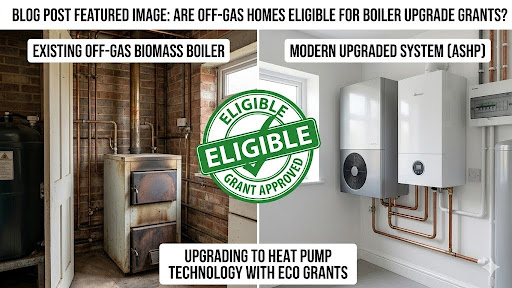

Not all homes in the UK are connected to the gas network. These are called off-gas homes. Their owners use oil, LPG, or electric heaters for heating their homes. Heating these homes can sometimes be expensive, especially in winter.
The government offers help to these homes in the UK for their heating needs. One of these is the Boiler Upgrade Scheme, which helps upgrade their heating systems to low carbon alternatives. People are curious to know if off-gas homes are eligible for this scheme.
This blog will explain in simple words what off-gas homes are, who can get help, and how they can get this help.
What Are Off-Gas Homes?
Off-gas homes are those homes in the UK that are not connected to the gas network. This means they cannot use gas for heating their homes or for water. Such homes are mostly found in rural areas, where oil or LPG heaters are used, or electric heaters, which are sometimes old storage heaters.
Using these heaters can sometimes be expensive, especially in winter. These homes are a major target for government help, as they are a source of high energy bills and sometimes contribute to more carbon emissions.
What Is the Boiler Upgrade Scheme?
The Boiler Upgrade Scheme helps people upgrade their existing heaters to new, low-carbon heaters, which are environmentally friendly, such as air source and ground source heat pumps. The government offers grants under this scheme to reduce the prices of these heaters, so people can buy them and reduce carbon emissions in the UK.
Are Off-Gas Homes Eligible?
The system accepts off-gas homes as eligible candidates but provides them with better chances of receiving approval because they use expensive fuel sources. The use of heat pumps generates cost savings through reduced expenses, which continue for an extended period. The process results in lower carbon emissions.
The program requires off-gas homes to submit applications because these homes gain maximum advantages from using cleaner heating technology. The homes show strong eligibility because they satisfy most requirements for assessment.
Why Off-Gas Homes Are a Priority
People who live in off-gas homes consume oil and LPG as their main source of energy. These fuels are expensive and less eco-friendly. Heat pumps deliver electricity-based heating solutions that surpass the efficiency of oil boilers. They operate by consuming electricity together with renewable energy resources from both air and ground sources.
The implementation of this alteration will decrease future energy expenditures. The initiative helps the United Kingdom achieve its net-zero emission targets. The government wants to help these homes switch first. That is why they are a key target group.
Basic Eligibility Rules
The property owner must either own their home or act as a landlord. The property must exist within the boundaries of England and Wales. The heating system must be replaced with a heat pump. Homeowners can replace their existing systems with heat pumps, which use fossil fuels as their primary energy source.
The home must present a current Energy Performance Certificate for verification. The EPC must not recommend major insulation upgrades. The insulation process should take place before installation of the new equipment. The process guarantees that the new system operates with maximum efficiency.
Types of Systems Covered
The program offers assistance to particular low-carbon systems that deliver enhanced energy efficiency. The systems demonstrate more effective energy performance because of their design.
Air Source Heat Pumps
These devices extract thermal energy from the surrounding outdoor air. Their operation remains functional during periods of extreme cold. The most commonly used option represents this solution.
Ground Source Heat Pumps
These devices extract thermal energy from soil resources. The system provides high energy efficiency, but the installation expenses remain significantly higher.
Biomass Boilers
These systems operate on wood pellets and logs. The system operates exclusively in rural zones. Every system provides different advantages for users. Your installer can help you choose the right one.
How Much Grant Can You Get?
The scheme offers fixed grant amounts. These reduce the upfront cost. Air source heat pumps get up to £7,500. Ground source heat pumps also get up to £7,500. Biomass boilers may get similar support of £5,000. The grant is paid directly to the installer. You only pay the remaining balance.
Benefits for Off-Gas Homes
Switching to a heat pump has many benefits, including:
- Lowers your energy bills over time. Heat pumps are more efficient than oil systems.
- Reduces your carbon footprint. This helps the environment and future generations.
- Increases your property value. Buyers prefer energy-efficient homes.
- You rely less on fuel deliveries. This makes heating more convenient.
Things to Consider Before Applying
Heat pumps work best in well-insulated homes. You may need to improve insulation first. Radiators may need upgrades. Heat pumps use lower water temperatures. Installation costs can still be high. Even after the grant, you pay some amount. You should choose a certified installer. They will assess your home properly.
Application Process
The process is simple and handled by installers.
- First, contact an approved installer, as they will check your home’s suitability.
- If eligible, they apply for the grant, and you do not need to apply directly.
- Once approved, installation can begin, and the grant is deducted from the upfront cost.
- Make sure to keep all documents because they may be needed for future checks.
Conclusion
Off-gas homes are eligible for boiler upgrade grants. They are often a top priority for support. These homes face higher heating costs. The scheme helps reduce this burden. Switching to a heat pump grants having many benefits. It lowers bills and reduces emissions.
The process is simple with the help of installers. Support is available to guide you at every step. If you live in an off-gas home, consider applying. It could improve comfort and save money long term.