
The world of transportation is evolving rapidly, and at the forefront of this transformation are modern rail systems. Total Rail Solutions encapsulate everything needed for efficient, sustainable rail travel and freight movement. Imagine a network where trains glide seamlessly along tracks, powered by advanced technology that enhances safety and efficiency while reducing environmental impact.
As cities grow and populations expand, the demand for reliable public transport increases. Modern rail systems offer an answer to these challenges, providing not just convenience but also economic benefits. This guide will take you through the essentials of Total Rail Solutions—covering their advantages, types, components, successful case studies, challenges faced during implementation, and what the future holds for this dynamic industry.
Whether you’re a transportation professional or simply curious about how train networks operate today, there’s much to explore in the realm of modern rail solutions. Let’s dive in!
Advantages of Modern Rail Systems
Modern rail systems offer a multitude of advantages that enhance both efficiency and sustainability. They are designed to accommodate high passenger volumes and freight loads, reducing congestion on roads.
With advanced technology, trains can operate faster and more reliably than ever before. This means shorter travel times for commuters and quicker deliveries for businesses.
Environmental benefits are significant too. Rail transport emits fewer greenhouse gases compared to cars or trucks per ton-mile, making it an eco-friendlier choice.
Safety is another major perk. Modern systems employ cutting-edge signaling technology that minimizes accidents and enhances operational safety.
Moreover, the integration of smart technologies allows for real-time data tracking which improves service management and customer experience. Passengers can enjoy updated schedules through apps while operators optimize routes based on demand patterns.
In essence, modern rail systems not only streamline transportation but also pave the way for greener urban landscapes.
Types of Modern Rail Systems
Modern rail systems come in various forms, each designed to meet specific transport needs. Light rail is popular in urban areas, offering quick transit with frequent stops. These systems help reduce traffic congestion while providing an efficient way for commuters to navigate city landscapes.
Heavy rail, often found in metropolitan regions, carries larger volumes of passengers over longer distances. Subways and elevated trains fall under this category, operating primarily underground or above street level.
Another significant type is high-speed rail. Designed for rapid intercity travel, these trains can exceed speeds of 186 miles per hour. They are a game changer for connecting major cities without the delays typical of road or air travel.
Freight rail serves as the backbone of goods transportation across vast distances. It efficiently moves bulk materials and commodities that are vital for industries and economies alike. Each system plays a crucial role in modern infrastructure.
Components of a Total Rail Solution
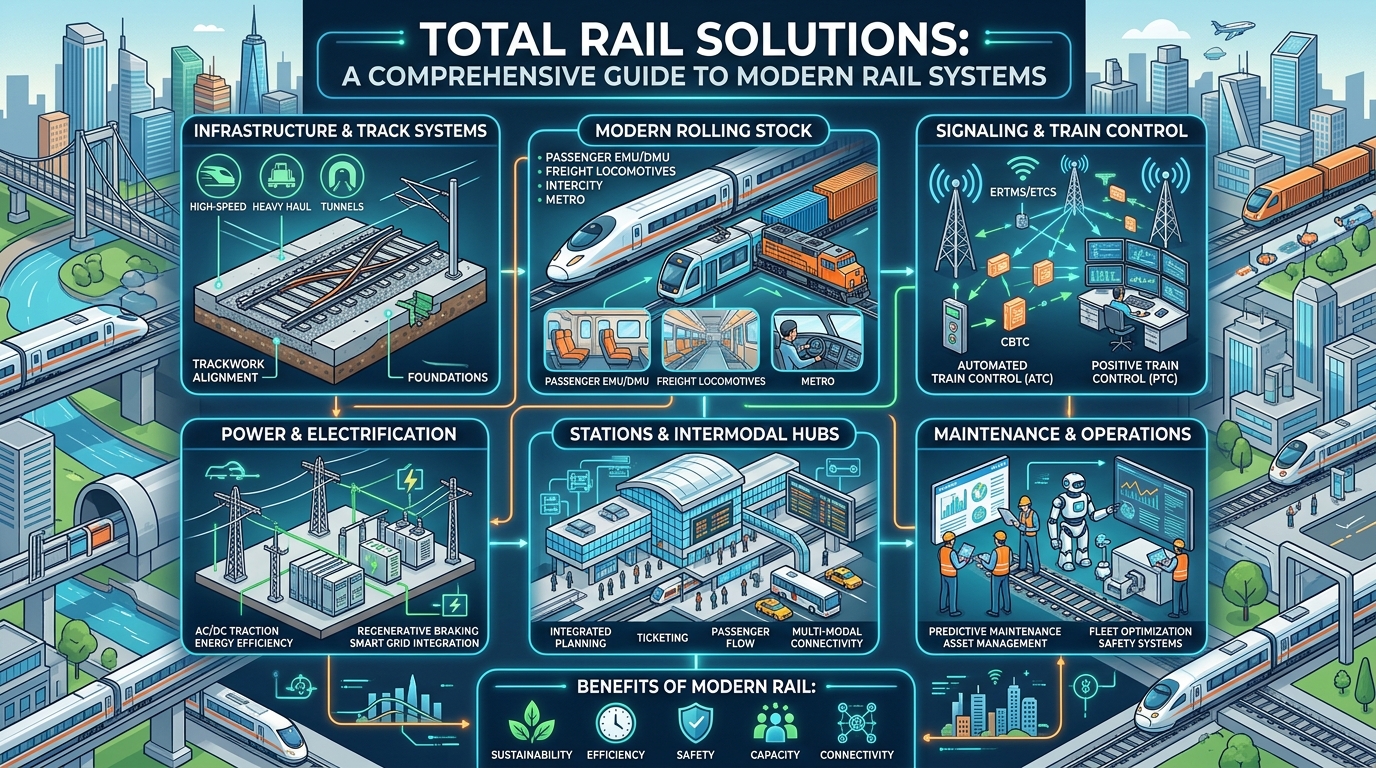
A Total Rail Solution comprises several key components that work seamlessly together. Each element plays a vital role in creating an efficient rail network.
Track infrastructure is foundational. This includes the rails, ties, and ballast that form the physical backbone of any railway system. Quality materials ensure safety and longevity.
Signaling systems are another critical aspect. Advanced technology allows for real-time communication between trains and control centers. This enhances safety and optimizes train schedules.
Rolling stock encompasses locomotives and carriages used for transport. Modern designs prioritize energy efficiency while providing passenger comfort or cargo reliability.
Maintenance management tools help keep everything running smoothly. Regular inspections and predictive maintenance reduce downtime significantly.
Integrated software solutions facilitate planning, scheduling, and operations management. These digital platforms enable operators to make data-driven decisions quickly, enhancing overall efficiency in the rail system.
Case Studies of Successful Implementations
One notable case study is the implementation of Total Rail Solutions in Germany’s urban transport system. The integration of smart ticketing systems reduced wait times and improved user experience significantly.
In Canada, a major freight company adopted advanced rail traffic management software. This enhanced scheduling efficiency and minimized delays across their network. As a result, they reported an impressive increase in on-time deliveries.
Australia has also embraced modern rail technologies with its high-speed train initiative linking major cities. This project not only cut travel time but also promoted eco-friendly transportation options.
Looking towards Asia, Japan’s Shinkansen showcases the effectiveness of Total Rail Solutions through its seamless operations and safety protocols. It serves as a benchmark for countries aiming to upgrade their rail infrastructure while maintaining passenger satisfaction.
Challenges and Solutions in Implementing Total Rail Solutions
Implementing Total Rail Solutions presents several challenges that stakeholders must navigate. One significant hurdle is the integration of legacy systems with modern technologies. Many rail networks still rely on outdated infrastructure, making upgrades complex and costly.
Another challenge lies in securing funding. Public-private partnerships are often necessary, but aligning interests can be difficult. Stakeholders may struggle to find common ground on financial contributions and project timelines.
Additionally, workforce training plays a crucial role. As technology evolves, so does the need for skilled personnel who can operate advanced rail systems effectively. Investing in ongoing education ensures safety and efficiency while minimizing disruptions during implementation.
Regulatory compliance poses its own set of obstacles. Adhering to various local and international standards requires careful planning and coordination among multiple entities involved in the project’s execution. Embracing flexibility and fostering collaboration is essential to overcome these challenges successfully.
Future of Modern Rail Systems
The future of modern rail systems is poised for exciting transformations. Technology is driving advancements that enhance efficiency and safety. Innovations like autonomous trains are on the horizon, promising to reduce human error and increase operational speed.
Sustainability will be a key focus as well. Rail systems are integrating greener technologies, such as electrification and hydrogen fuel cells, which can significantly lower carbon footprints.
Smart infrastructure is another trend gaining momentum. Utilizing IoT (Internet of Things) enables real-time monitoring of trains and tracks, improving maintenance schedules and reducing downtime.
Passenger experience will also evolve with upgraded amenities and digital services. Enhanced connectivity options will make travel more enjoyable while providing seamless transitions between different transport modes.
As cities grow and environmental concerns intensify, modern rail systems will play an essential role in shaping urban mobility solutions for generations to come. Each step forward brings us closer to a transformative landscape in transportation.
Conclusion
Total Rail Solutions have emerged as a pivotal element in modern transportation infrastructure. These systems not only enhance efficiency but also provide sustainable alternatives to traditional transport methods. The advantages of adopting modern rail solutions are manifold, from reduced traffic congestion to lower carbon emissions.
The variety of rail systems available today, including high-speed trains and light rail transit, caters to diverse needs across the globe. Each type contributes uniquely to urban development and regional connectivity. Essential components like signaling technology, track design, and energy-efficient rolling stock play crucial roles in creating comprehensive rail networks that respond dynamically to passenger demands.
Successful implementations around the world showcase how total rail solutions can transform cities and economies alike. However, challenges such as funding limitations or technological integration remain hurdles that stakeholders must navigate carefully. Innovative strategies continue to emerge, addressing these issues effectively.
Looking ahead, the future of modern rail systems is promising with advancements in automation and sustainability leading the way. As countries invest more into their infrastructures with an emphasis on green technologies and smart logistics solutions, total rail solutions will undoubtedly evolve further.
The journey toward efficient public transport through innovative railway systems continues; it’s one worth watching closely for its potential impact on our daily lives and environment.