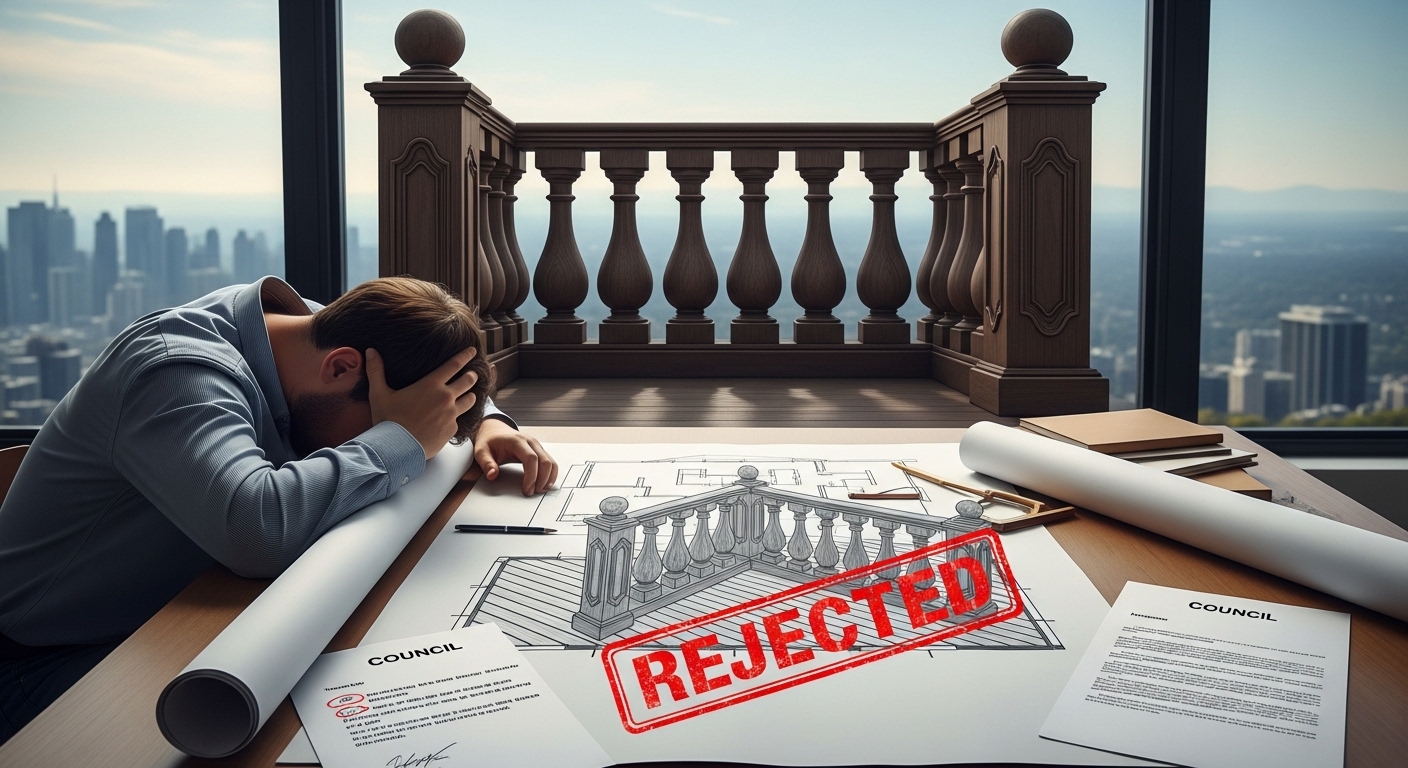

You submitted plans for that elevated deck.
Council knocked them back.
Reason? Your proposed timber balustrade creates visual bulk that impacts neighbouring properties or streetscape character.
Glass balustrade gets approval where solid options don’t.
Transparency matters for planning permits more than most people realise.
Why Planning Officers Prefer Glass
Council planners assess visual impact on surrounding properties.
Solid balustrades create bulk and mass. They change sight lines. They block views from neighbouring homes.
Glass maintains transparency. Minimal visual impact from street or adjacent properties.
Your deck exists but it doesn’t dominate the visual landscape.
In urban areas with tight blocks, this makes the difference between approval and rejection.
Heritage overlays particularly favour glass. Maintains historical sight lines while meeting modern safety codes.
Height Restrictions and Glass Solutions
Many councils have strict height limits for structures visible from the street.
A deck with solid timber balustrade might exceed allowable height.
Glass balustrade reduces perceived height. The structure feels lower because you can see through it.
Some planning schemes specifically allow additional height for transparent balustrades versus opaque ones.
Worth checking local planning provisions before designing your deck.
Glass might let you build higher than timber or metal, giving you better views and more usable space.
Neighbour Disputes Glass Prevents
Solid balustrades create privacy concerns for neighbours.
They worry about overlooking. They complain about lost views. They object to planning applications.
Glass addresses this by maintaining reciprocal sight lines.
Your neighbours can see you’re not staring directly into their living room. Visual transparency reduces concern about privacy invasion.
Objections from neighbours delay or kill planning applications.
Glass reduces objection rates significantly. Easier approvals, less conflict, faster builds.
Wind Loading in Exposed Locations
Elevated coastal decks cop serious wind.
Solid balustrades create wind resistance. They catch maximum force.
This requires heavier structural support. Bigger posts. Deeper footings. More expensive deck frame.
Glass panels allow wind to flow around them more effectively.
Smaller gaps between panels let pressure equalise. Reduces total wind load on the structure.
Your deck frame can be lighter. Foundation requirements reduce. Overall construction cost drops despite glass being more expensive than timber.
Engineering calculations prove this. Glass balustrade can actually reduce total project cost for exposed locations.
Semi frameless glass balustrades for Coastal Properties
Fully frameless systems look amazing but they’re not always practical for coastal Tasmania.
Salt air is brutal on minimal fixings. Corrosion happens faster with fewer, smaller connection points.
Semi frameless uses posts at regular intervals. More connection points distributing load.
Easier to maintain and replace components. If one section needs work, you’re not dismantling the entire run.
Posts provide wind bracing. Important for exposed locations where wind loads are severe.
The slight reduction in pure transparency is worth the structural benefits and easier maintenance.
Coastal properties need to prioritise durability over absolute minimalism.
Glass Types Beyond Basic Clear
Standard clear toughened glass works fine for most applications.
But there are better options depending on your situation.
Tinted glass reduces heat transmission. Important for northern or western facing decks that cop afternoon sun.
Low-iron glass is optically clearer than standard glass. No green tint. Better for photography or when clarity matters.
Laminated glass provides acoustic dampening. Reduces traffic noise on street-facing decks.
Coated glass can be self-cleaning. Reduces maintenance frequency for hard-to-reach installations.
These upgrades cost more but solve specific problems that standard glass doesn’t address.
Compliance with Building Code Wind Ratings
Tasmania’s building code specifies wind ratings based on location.
Coastal areas, elevated sites, and exposed positions have higher requirements.
Glass thickness, fixing specifications, and post spacing all factor into wind rating calculations.
You can’t just copy an installation from a sheltered suburban block and use it on a coastal clifftop.
Engineering certification confirms your installation meets code requirements for your specific site.
Insurance won’t cover failures from non-compliant installations.
Council won’t issue completion certificates without proper certification.
Professional installers know local requirements. DIY doesn’t.
Fixing Systems That Handle Tasmanian Conditions
The glass is important but fixings determine long-term performance.
Stainless steel comes in different grades. 316 marine grade is mandatory for coastal areas. 304 grade corrodes too quickly.
Spigot systems need proper gaskets and weatherproofing. Water ingress causes corrosion from inside the fixing.
Base channels require drainage. Water pools in channels without weep holes. Freezes in winter. Cracks the channel.
Expansion gaps between panels handle thermal movement. Glass expands and contracts with temperature. Fixed installations without expansion gaps crack panels.
Quality fixings cost more but they’re what determines whether your balustrade lasts 5 years or 20 years.
Installation Timing and Weather Considerations
Glass installation requires specific weather conditions.
High wind days make handling large panels dangerous. Installation stops when wind exceeds safe limits.
Rain affects adhesive curing for some fixing systems. Wet conditions delay installation.
Extreme heat or cold affects sealant application. Temperature windows exist for proper curing.
Professional installers schedule around weather. Trying to rush installation in poor conditions creates problems.
Allow flexible timing in your build schedule. Glass installation might shift by days based on conditions.
This isn’t like timber balustrade where you can work in most weather.
Strata and Body Corporate Approvals
Apartment or unit developments need body corporate approval for balustrade changes.
Some have strict design guidelines. Approved materials and colours only.
Glass often gets easier approval than other materials because it maintains building aesthetic consistency.
But you still need written approval before starting work.
Doing it without approval means expensive removal and reinstallation to approved specifications.
Check strata bylaws before designing your balustrade replacement.
Child Safety Beyond Code Minimums
Building code specifies minimum gap sizes and heights.
Some families want additional safety beyond minimums.
Lower balustrade height with taller glass panels. Kids can’t climb as easily.
Laminated glass instead of just toughened. Holds together if impacted rather than shattering into pebbles.
Some installations add a horizontal rail at mid-height on the inside. Stops kids using furniture to climb.
These additions cost extra but provide peace of mind for families with young children.
Code minimums are exactly that. Minimums. You can exceed them if it suits your situation.
Comparing Quotes Properly
Cheapest quote is rarely the best value.
Glass quality varies. Cheap glass has visible distortions and inclusions.
Fixing quality determines longevity. Cheap fixings fail prematurely.
Installation experience matters. Glass is unforgiving. Mistakes are expensive.
Compare quotes on same specification. Same glass thickness, same fixing type, same warranty terms.
If one quote is 30% cheaper than others, there’s a reason. Usually poor quality materials or inexperienced installers.
Small savings upfront become large expenses later when you’re replacing failed components or entire sections.
Retrofit vs New Build Considerations
Adding glass balustrade to an existing deck is more complex than new builds.
Existing deck structure might not support glass weight and wind loads.
Structural assessment determines if reinforcement is needed.
Decking boards might need replacing where base channels mount. Old boards are too degraded for secure fixing.
Waterproofing on existing decks requires careful integration. Can’t just bolt through without proper sealing.
Retrofit costs more per metre than new builds because of these complications.
But it’s still worth doing if your deck structure is sound and views are worth protecting.
The Insurance Question
Building insurance covers glass balustrade the same as any other structural element.
But installation quality affects claims.
Non-compliant installations void coverage. DIY work without certification won’t be covered.
Storm damage to properly installed glass is covered. Storm damage to cheap installations might be disputed.
Document your installation. Keep certification, receipts, and warranty information.
Some insurers offer premium reductions for safety improvements including compliant balustrades.
Worth checking with your insurer before and after installation.
When to Replace Existing Balustrade
Structural issues with existing timber balustrade mean replacement is necessary not optional.
Rot in posts or rails. Loose fixings. Significant movement when pushed.
Aesthetics matter too. Tired-looking balustrade drags down your whole deck’s appeal.
Planning a deck extension? Match new balustrade to existing or replace it all for consistency.
Property sale preparation. Glass balustrade adds appeal and perceived value.
Council requirement for compliance. Some old balustrades don’t meet current codes.
Don’t wait for catastrophic failure. Replace when deterioration becomes obvious.
Long-Term Performance Data
Quality glass balustrade installations in Tasmania show 15-20 year lifespan.
Fixings might need replacement around year 10-12 in coastal locations. Glass itself lasts the full period.
Compare to timber needing major work every 5-7 years.
Total cost of ownership over 20 years favours glass despite higher initial price.
Maintenance time is significantly less. Quick cleaning versus sanding, oiling, painting.
Actual performance data from local installations confirms this. Not just manufacturer claims.
The Reality Check
Glass balustrade solves specific problems. Planning approval difficulties. View obstruction. High maintenance timber.
It costs more initially. Requires professional installation. Needs specific conditions for success.
If you’ve got views worth protecting, planning constraints favouring transparency, or you’re sick of maintaining timber, glass makes sense.
If you’re on a tight budget, have no views to protect, or your location has no planning sensitivities, timber or metal might suit better.
Match the solution to your actual situation instead of following trends or assumptions about what’s “best”.